The choice between a micro-market and a vending machine usually starts with a simple question: what do employees actually need during the day?
Some workplaces only need fast access to cold drinks and snacks. Others need a better lunch option, fresh food, healthier products, and a breakroom that feels less like a corner with machines and more like a small on-site store.
Both options can work. The mistake is assuming they solve the same problem.
A vending machine is compact, controlled, and easy to place in many buildings. A micro-market is more open, more flexible, and better suited for workplaces where employees want variety and fresh food. GoldStar Vending helps Houston businesses compare both options based on space, employee count, schedule, and how the breakroom is used.
What Vending Does Well
Vending works because it is direct. Employees need something quick, and the machine is there. That simplicity is still valuable.
A good vending setup can support an office, warehouse, school, healthcare facility, dealership, or customer waiting area without requiring much space. It can be placed where employees already pass through the building. It can serve people on different schedules. It can also work in locations that are not large enough for a full market.
Modern vending is not limited to the old idea of candy and soda. Depending on the machine and service program, it can include cold drinks, snacks, better-for-you products, fresh food, and cashless payment. For many businesses, that is enough to make breaks easier.
Vending is usually the better starting point when space is limited, traffic is moderate, or employees mostly need quick snacks and beverages.
What a Micro-Market Changes
A micro-market changes the feel of the breakroom.
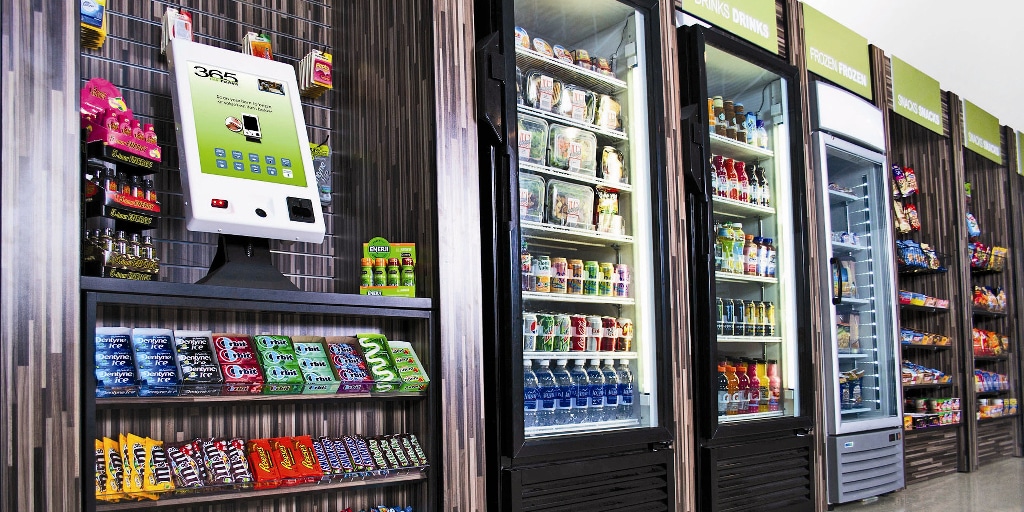
Instead of choosing from products behind glass, employees browse open shelves and coolers. They can pick up a salad, sandwich, drink, breakfast item, snack, or healthier option and pay at a self-checkout kiosk. The experience feels closer to a small convenience store inside the workplace.
That matters because some employee needs do not fit neatly into a vending machine. Lunch is one example. A vending machine can help, but a micro-market can usually offer more fresh food and more variety. Larger drinks, seasonal products, protein snacks, fruit, and meal options are also easier to present in a market format.
For a Houston workplace where employees regularly leave for lunch or snacks, a micro-market may address the real issue more directly than another machine.
The Space Question
Space often decides the first round of the conversation.
A vending machine can fit into a small breakroom, hallway, lobby, or warehouse area. A micro-market needs more planning. It needs room for shelving, coolers, checkout equipment, electrical access, and enough traffic flow for employees to use it comfortably.
That does not mean a micro-market requires a huge space. It means the space needs to support the experience. If people feel cramped or the area is hard to access, the market will not reach its potential.
When GoldStar looks at a workplace, the question is not just “Is there room?” It is “Will employees naturally use this area?” A market tucked away in the wrong place may not perform as well as a vending machine placed exactly where people need it.
Employee Count Matters, But It Is Not Everything
Employee count is important, but it is not the only factor.
A business with a smaller team but limited nearby food options may have a strong need for on-site refreshments. A larger workplace may still be better served by vending if the space is split across multiple areas or if employees take very short breaks.
Shift schedules matter too. A facility with early, late, or overnight shifts may need reliable access when nearby restaurants or stores are closed. A micro-market can be valuable in that situation, but vending machines placed in the right spots may also solve the problem.
The better question is how people move through the building. Where do they take breaks? When do they need food or drinks? Do they leave the property? Are there visitors, patients, tenants, or customers using the same space?
Product Variety and the Breakroom Experience
This is where micro-markets usually pull ahead.
If the goal is basic convenience, vending may be enough. If the goal is a better breakroom experience, a micro-market can offer more room to build around employee preferences.
A market can carry fresh food, breakfast items, larger drinks, protein snacks, salads, wraps, traditional favorites, and healthy options in a way that feels more natural. Employees can see the products, compare choices, and choose the item that fits their day.
That kind of choice can matter for morale. People do not always talk about the breakroom when it works, but they definitely notice when it does not.
Can a Business Use Both?
Yes, and many should.
The decision is not always micro-market or vending machine. A larger business might use a micro-market in the main breakroom and vending machines in other areas of the building. A warehouse might use vending near production and a market near the employee entrance. An office might combine coffee, vending, and a smaller market-style setup over time.
Office coffee can also fit into either approach. Coffee handles one part of the daily routine, vending handles quick access, and a market handles broader food and beverage needs.
The best refreshment program follows the workplace instead of forcing everyone into one solution.
How to Make the Decision
Start with the behavior you already see.
If employees leave for a soda or snack, vending may solve the problem. If they leave because they want lunch, fresh food, or more variety, a micro-market may be worth considering. If they leave for coffee, the first fix may be a better coffee program.
Then look at the building. A compact space near heavy foot traffic may be perfect for vending. A dedicated breakroom with enough room for coolers and shelves may support a market. Multiple departments or shifts may call for a combination.
Finally, think about service. Whether you choose vending or a micro-market, the program only works if it stays stocked, clean, and aligned with what employees buy. Product mix matters. Restocking matters. Payment convenience matters. Service response matters.
GoldStar can review your space and talk through pricing and service options so the recommendation is based on fit, not guesswork.
Frequently Asked Questions
Is a micro-market better than a vending machine?
It depends on the workplace. A micro-market is better when employees need more variety, fresh food, and an open shopping experience. Vending is better when the business needs compact, reliable access to snacks and drinks.
How many employees do you need for a micro-market?
There is no single number that applies to every business. Employee count, schedule, space, product demand, and nearby food options all matter.
Do vending machines still make sense for offices?
Yes. Vending machines are still useful for offices, warehouses, schools, healthcare settings, and customer areas, especially when space is limited or the need is quick access.
Can micro-markets include healthy food?
Yes. Micro-markets are often a strong fit for healthy options because they can include fresh food, salads, fruit, protein snacks, and a wider drink selection.
Can GoldStar help decide?
Yes. GoldStar Vending can review your workplace and recommend vending, a micro-market, coffee service, or a combination based on how your employees use the space.
Choose the Setup Employees Will Actually Use
The right choice is not always the biggest option or the newest option. It is the one that fits your building and your people.
If employees need quick snacks and drinks, vending may be the smart move. If they need fresh food, more variety, and a better breakroom experience, a micro-market may make more sense. If your workplace needs both, the best answer may be a blended program.
Contact GoldStar Vending to compare vending machines and micro-markets for your Houston business.